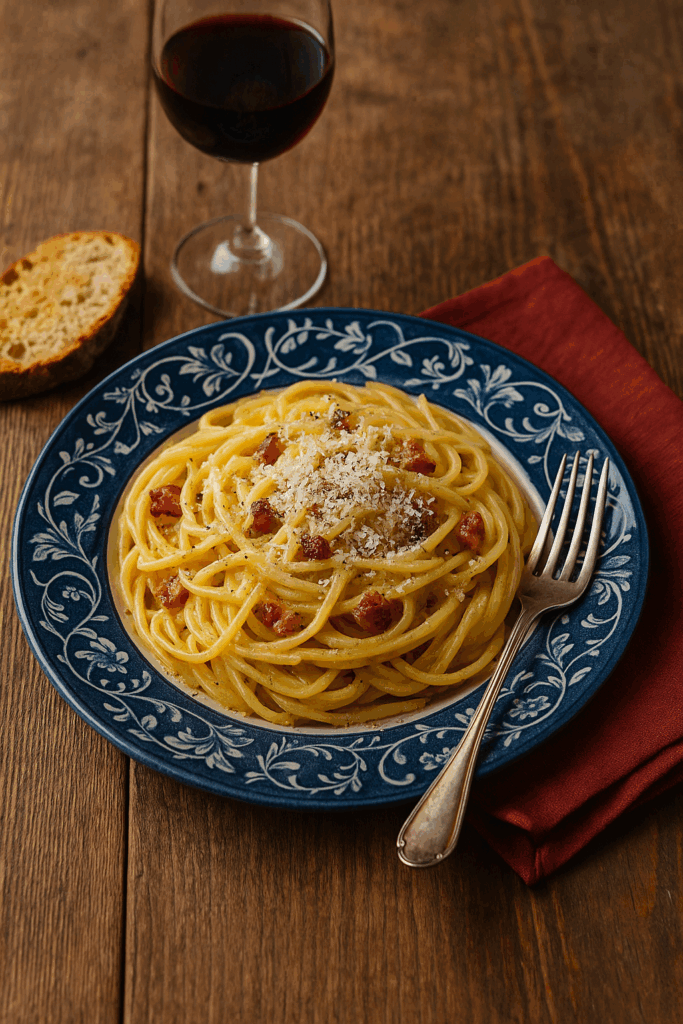
Ciao amici! Welcome to Boho Bites by Bella, where food is never just about filling a plate but about stories, memories, and the joy of sharing. Today I am bringing you one of the most beloved dishes of Italian cuisine: Spaghetti alla Carbonara.
This recipe is proof that you do not need a long list of ingredients to create something unforgettable. Carbonara is creamy without cream, indulgent without butter, and rich without effort. It is a dish that comforts and impresses at the same time.
Why Carbonara Matters
Carbonara is more than just pasta. It represents the Italian philosophy of cooking: take simple, honest ingredients and transform them into something extraordinary.
- Quick: ready in under 20 minutes.
- Authentic: based on tradition, no shortcuts.
- Comforting: warm, rich, and deeply satisfying.
- Elegant: ideal for both weeknights and dinner parties.
“The simpler the recipe, the more important each ingredient becomes.”
A Short History of Carbonara
The origins of Carbonara are still debated. Some say it was created by coal miners, the carbonari, who needed hearty meals prepared with pantry staples. Others believe it came about during World War II, when American soldiers in Rome brought bacon and eggs, and Italians combined them with pasta.
Regardless of the story you choose, Carbonara has become a proud Roman classic. And one important reminder:
- No cream.
- No garlic.
- No onion.
The luscious texture comes only from eggs, Pecorino Romano, and starchy pasta water.
Ingredients for Two
- 200 g (7 oz) spaghetti, or rigatoni if preferred
- 100 g (3.5 oz) guanciale, diced (pancetta if guanciale is not available)
- 2 large eggs + 1 egg yolk, room temperature
- 50 g (½ cup) Pecorino Romano cheese, finely grated
- Freshly cracked black pepper
- Pinch of salt for the pasta water
Equipment
- Large pot
- Skillet or frying pan
- Mixing bowl
- Whisk or fork
- Tongs or pasta fork
- Cheese grater
Step-by-Step Instructions
1. Prepare the pasta water
Bring a large pot of salted water to a boil. The water should taste like the sea.
2. Cook the guanciale
Cut guanciale into small cubes or strips. Place in a skillet over medium heat. Cook slowly until the fat renders and the meat becomes crispy. Remove from heat but leave the fat in the pan.
3. Mix eggs and cheese
In a bowl, whisk together the eggs, extra yolk, Pecorino Romano, and a generous grind of black pepper until smooth and creamy.
4. Cook the pasta
Cook spaghetti until al dente, usually one minute less than the package recommends. Before draining, reserve at least one cup of starchy pasta water.
5. Combine pasta and guanciale
Drain the pasta and add it directly into the skillet with the guanciale. Toss to coat the pasta with the rendered fat.
6. Create the sauce
Remove the skillet from heat. Quickly add the egg-cheese mixture, tossing the pasta vigorously. Add splashes of pasta water until the sauce is silky and coats every strand.
7. Serve immediately
Twirl the pasta onto plates, sprinkle with more Pecorino Romano and black pepper, and serve right away.
Tips for the Perfect Carbonara
- Use guanciale if you can find it. Pancetta is good, but guanciale is better.
- Make sure eggs are at room temperature so they mix easily.
- Always remove the skillet from heat before adding eggs to avoid scrambling.
- Save enough pasta water. It is essential for a creamy sauce.
- Grate cheese finely so it melts into the sauce.
- Taste before salting, since guanciale and Pecorino are already salty.
“Patience and timing are as important as ingredients.”
Variations
Although traditional Carbonara should not be changed, sometimes you may want to adapt it.
- Vegetarian: use sautéed mushrooms instead of guanciale.
- Gluten-free: use a high-quality gluten-free spaghetti.
- Lighter: skip the extra yolk and use only whole eggs.
- Spicy: add a pinch of chili flakes with the pepper.
- Luxury: add shaved truffle or a drizzle of truffle oil on top.
Frequently Asked Questions
Can I add cream?
Technically yes, but then it is no longer authentic Carbonara. The creaminess must come from eggs and cheese.
What pasta shapes work best?
Spaghetti is classic, but rigatoni or bucatini also hold sauce beautifully.
Can I prepare it in advance?
Carbonara is best eaten fresh. It does not reheat well because the sauce dries out.
How can I make it more child-friendly?
Use pancetta instead of guanciale for a milder taste, and reduce the black pepper.
Why did my eggs scramble?
Most likely you added the egg mixture while the skillet was too hot. Always remove from heat first.
Why is my Carbonara too dry?
You probably forgot to add enough pasta water. Do not be afraid to use it generously.
Serving Suggestions
Carbonara is a star on its own, but thoughtful pairings make it shine brighter.
- Wine: Chianti or Montepulciano for red, or Frascati for white.
- Salad: fresh arugula with lemon and olive oil.
- Bread: a slice of rustic country bread to mop up the sauce.
- Dessert: tiramisu, panna cotta, or fruit crostata to finish the meal.
A Cultural Note
In Italy, Carbonara is often eaten at lunch rather than dinner. It is considered filling and satisfying, giving energy for the rest of the day. Families and friends gather around the table, and the dish is served in large bowls so everyone can help themselves.
Carbonara also sparks debates in Italy. Some argue passionately about the correct ratio of eggs, whether to include only yolks or also whole eggs, and how much cheese is enough. But all Italians agree on one rule: no cream.
A Personal Memory
I remember my first true Carbonara in a small trattoria in Trastevere, Rome. The pasta was perfectly al dente, the sauce silky, the guanciale crisp. I could hear conversations in Italian all around me, the clinking of glasses, and the smell of freshly baked bread. That meal was more than food; it was a moment of connection to tradition and place.
Whenever I make Carbonara at home, I think back to that day. I believe food should not only nourish the body but also remind us of experiences, people, and emotions.
Final Thoughts
Spaghetti alla Carbonara shows that the simplest recipes are often the best. With just five ingredients and careful timing, you can bring the flavor of Rome to your own kitchen.
Take your time, choose the best ingredients, and enjoy the process. Cooking is not about perfection but about love and sharing.
“At the end of the day, food is love. And Carbonara is one of Italy’s greatest love letters to the world.”
So next time you want to treat yourself or your loved ones, make this dish. From my Italian kitchen to yours: buon appetito.